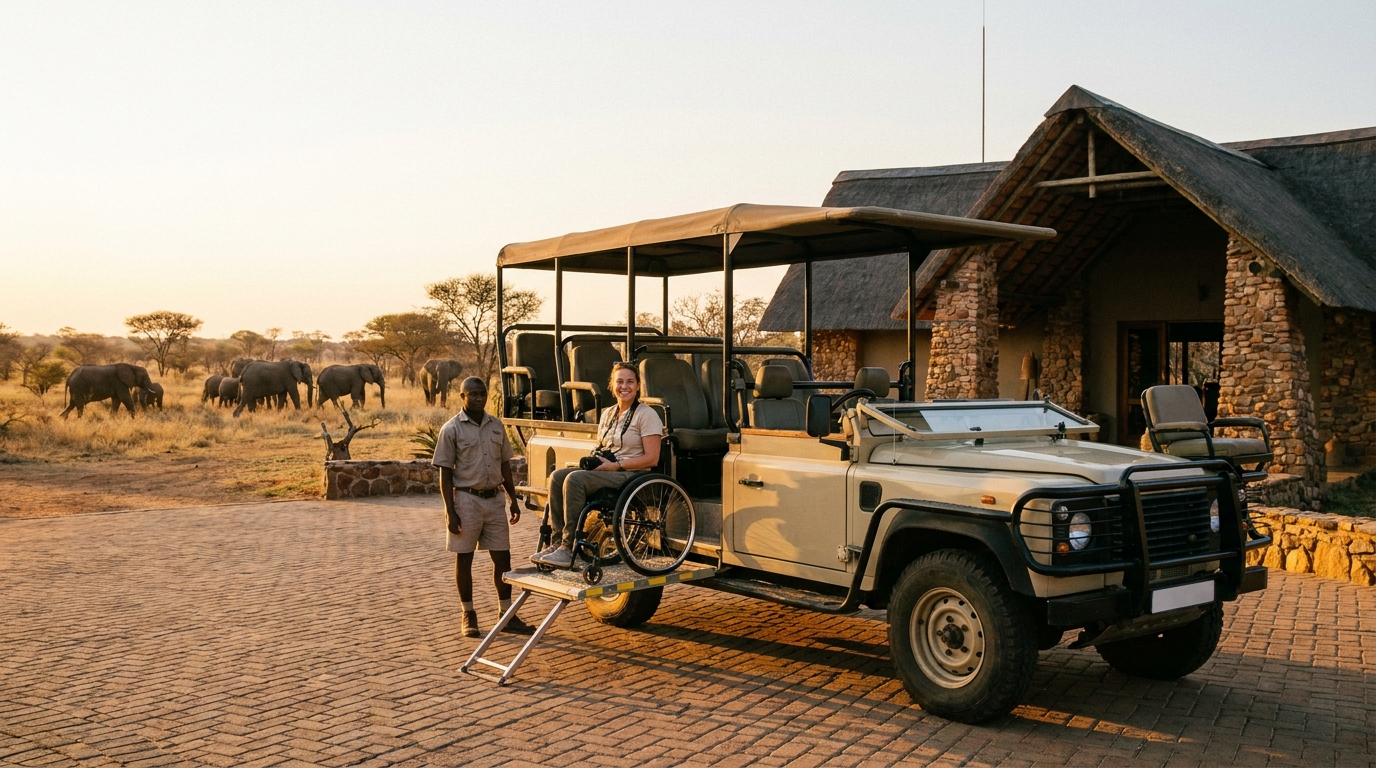
Adapted game drive vehicle with wheelchair ramp at a South African game reserve

Safari Is Not Inaccessible. It Just Requires the Right Information.

The safari industry has made progress on accessibility - but it has made that progress quietly, inconsistently, and with a persistent tendency to describe all disabled travellers as “wheelchair users who need a ramp.” That framing misses most of the people who need accurate information.

A traveller with MS planning a five-day safari has different questions from someone in a manual wheelchair, who has different questions again from a traveller with visual impairment or a dialysis patient managing treatment schedules. The same lodge might work well for one and be entirely impractical for another.

What Our Safari Assessments Cover

For each assessed operator and lodge, our guides address: vehicle boarding and onboard accommodation for wheelchairs; path and terrain surfaces between accommodation and main areas; bathroom and sleeping configuration; staff training on disability-specific needs; game drive timing and duration flexibility for fatigue-based conditions; distance from medical facilities for medically complex travellers; and whether claims of accessibility have been physically verified.

We visit or verify through structured assessments. We do not republish the lodge’s own marketing copy.

Operators We Assess and Why It Matters

South Africa has a small number of safari operators who have invested seriously in accessible game drives - adapted vehicles with hydraulic lifts, custom seating, and staff who understand what different disability types actually require. We identify them by name. We also note operators who describe themselves as accessible but deliver something meaningfully less - because knowing who not to book is as valuable as knowing who to book.

FAQ

AccessibleSafariPlanning-FAQs

The difference is usually in the details the property doesn't mention. A lodge might advertise a 'wheelchair-accessible chalet' that has a step at the entrance, a standard shower, and game drives that only work if someone can transfer independently. Our assessments ask the specific questions: Can a power wheelchair user complete the full guest experience? Is there a roll-in shower? What are the vehicle boarding arrangements? Are the paths between accommodation and the main lodge usable after rain?

No - and this is one of the most significant gaps in how the industry discusses accessibility. Our safari guides specifically address: mobility impairment (ambulant and wheelchair), MS and fatigue-based conditions, dialysis and medically complex travellers, visual impairment, and chronic illness. Each has different priorities, and we write for them specifically.

Yes. These are meaningfully different access requirements - power chairs are heavier, wider, and have different transfer needs. Our operator assessments distinguish between them. A lodge that works well for a manual chair user may not work at all for someone in a power chair, and we say so clearly.

Self-drive safari in parks like Kruger or Addo is accessible for many travellers, particularly those who can drive an adapted vehicle or travel with a companion who drives. Our destination guides cover self-drive access specifically, including road surfaces, rest camp facilities, and accessible viewpoints and hides.

ATS provides the verified research and guidance - we are not a booking agent. Our guides give you the operator names, contact details, specific questions to ask, and the honest assessment of what each option delivers. You book directly with the operator, equipped with information that most travellers have to discover on arrival.

Ready to Plan Your South Africa Trip?

Browse verified accommodation, read destination guides, or get in touch with a specific question.